
Today, Belgrade is home to several stadiums, each an integral part of the city’s history and popular culture. It’s hard to imagine any major city without its stadiums. Yet, few Belgraders know about the first stadium ever built in their city. Why? Unfortunately, that stadium has long been lost to history, but that doesn’t mean it should be forgotten. On the contrary—it was revolutionary in many ways, and we should remember it with pride.
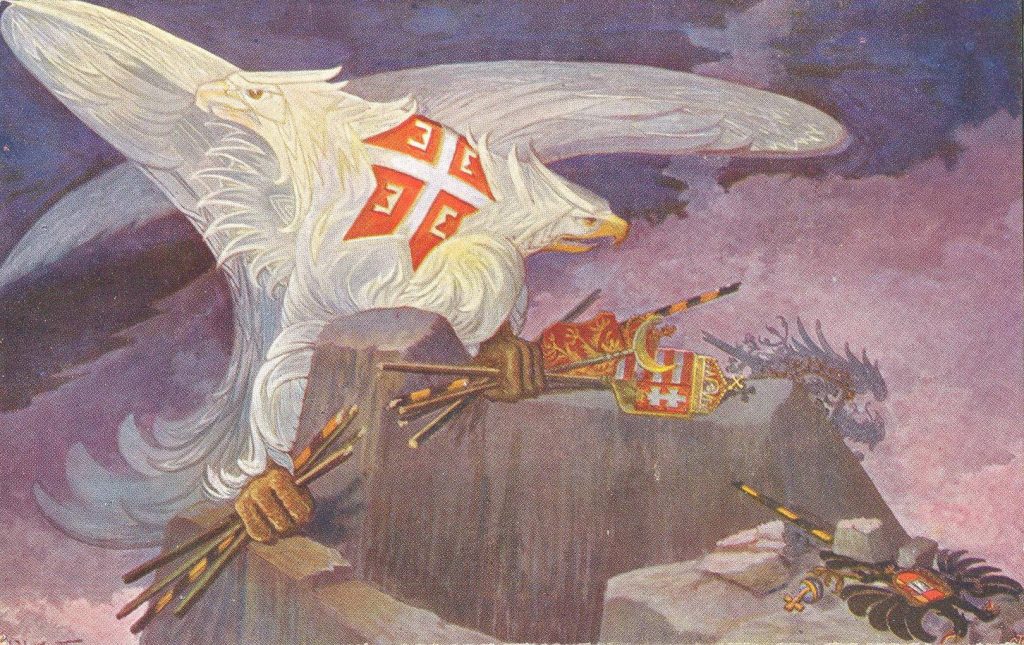
The first stadium in Belgrade was designed specifically for the Sokol Rally, held in 1930. Just like their stadium, the Sokoli movement has also faded from public memory.
The Sokoli were founded in 1862 by Miroslav Tirš, a name now best known from a street that runs past the former Sokol Hall—today widely recognized as Stari DIF.
Tirš established the Sokol movement in Prague with the goal of uniting Czechs living under Habsburg rule through gymnastics, athletics, and other sports, strengthening their national identity and culture.
The movement quickly spread beyond the Czech lands, becoming a widespread phenomenon among other Slavic nations within the Habsburg Empire. The Sokoli played a crucial role in strengthening the Pan-Slavic movement, which ultimately contributed to the formation of Poland, Czechoslovakia, and the Kingdom of Serbs, Croats, and Slovenes (later Yugoslavia) following the collapse of Austria-Hungary after World War I.
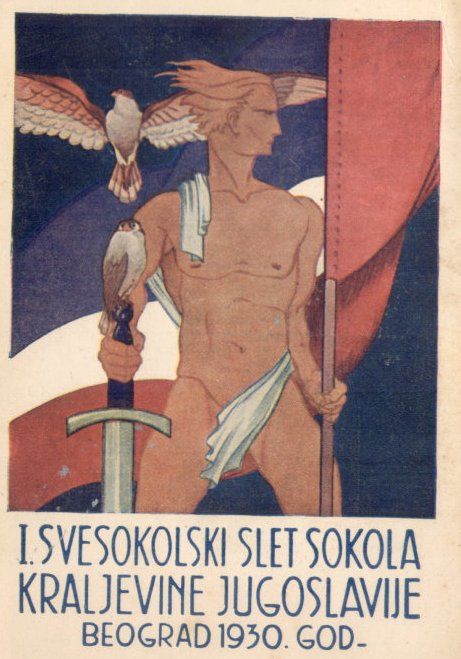
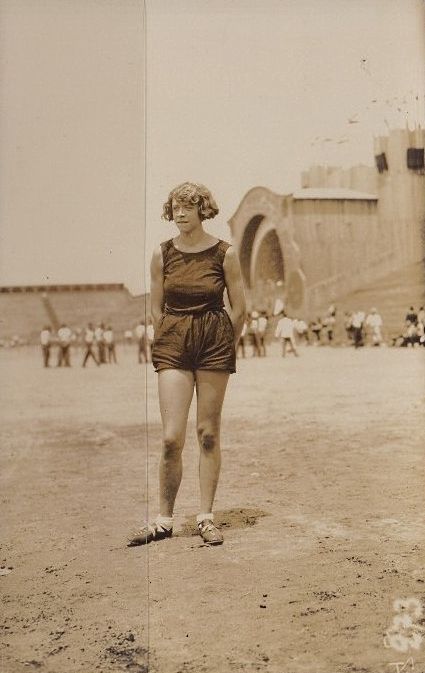
Although the Sokol movement nurtured Slavic traditions and identity, it was neither exclusive nor elitist. On the contrary, members of Sokol societies came from various religious backgrounds, social classes, and nationalities, and even both genders. Women were considered equal to men within the Sokol movement, which significantly contributed to the emancipation of women in areas where Sokol activity was present. While most Sokoli were amateur athletes, some individuals, such as Leon Štukelj, represented the Kingdom of Yugoslavia and won Olympic medals in gymnastics.
Although widely associated with socialist Yugoslavia, the Slet was originally invented by the Sokoli. It was the most important event for gathering Sokoli from all Slavic countries and beyond. Thousands of Sokoli and Sokoliceparticipated in these rallies, performing perfectly synchronized exercises. This format was later fully adopted in socialist Yugoslavia, particularly for the Day of Youth celebrations.
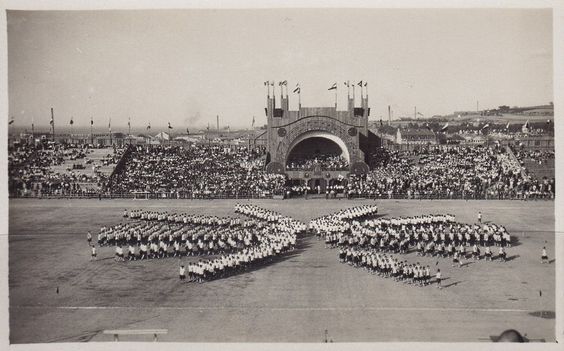
Slet events were held in specially designed stadiums, known as sletišta, which were distinct from Olympic-style stadiums due to their square-shaped layout.
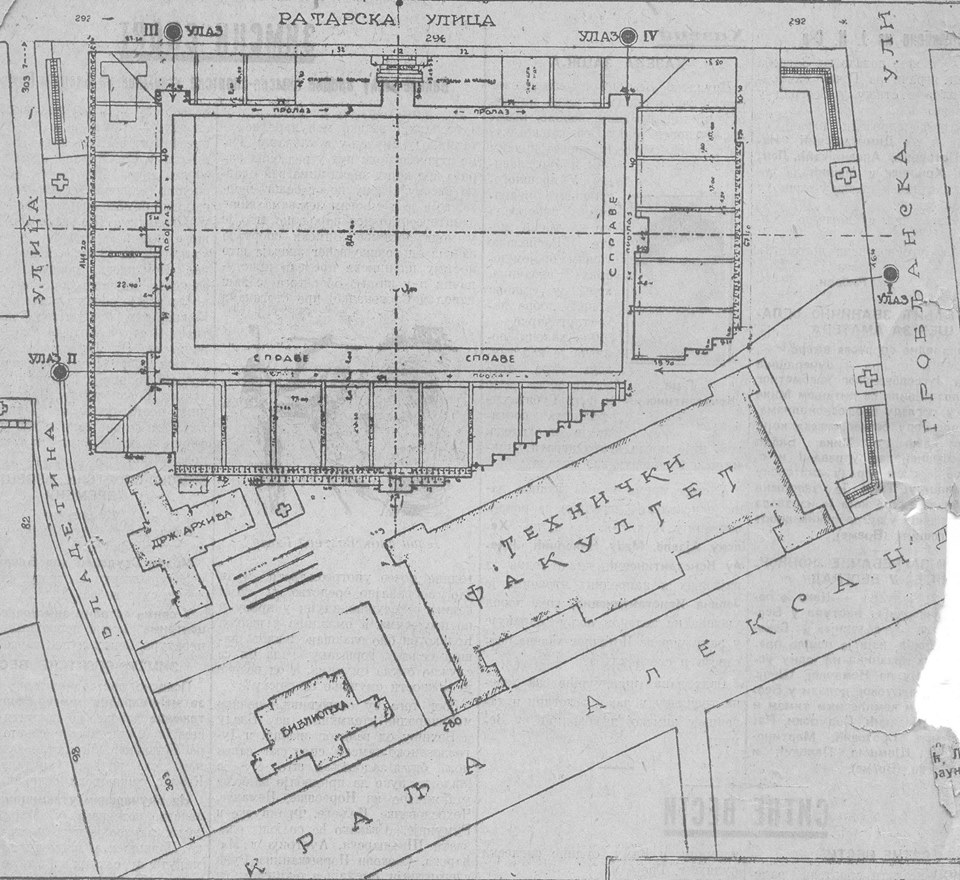
The original location proposed for the stadium was Donji Grad (Lower Town) of the Belgrade Fortress. The idea was to construct a grand, prefabricated stadium with a capacity of 5,000 performers and 100,000 spectators. However, King Alexander I Karađorđević rejected this ambitious proposal due to the high costs associated with terrain leveling and embankment construction.
The king also dismissed the idea of building the stadium on Banjičko polje, believing that the location was too far from the city center. Ultimately, the decision was made to construct the stadium on a site behind the Technical Faculty building.
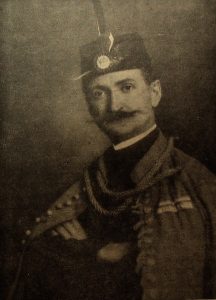
Korunović designed a stadium covering an area of 12,560 m². Its structure required 5,100 m³ of timber, making it the largest wooden construction in Central Europe at the time. Although the stadium was prefabricated, its stands were supported by concrete footings. The static calculations for the stands were carried out by architect Predrag Zrnić, who also oversaw the construction alongside engineer Radivoje Radulović, a designer of several Sokol Halls himself. The construction took about two months, employing 450 workers, and its structural integrity was tested by three military regiments. The exercise area covered 12,600 m², accommodating 3,500 gymnasts simultaneously, while the stands could seat 45,000 spectators. During construction, citizens were allowed to visit the stadium on holidays and Sundays for a fee of two dinars. A separate entrance for the royal family, government officials, and diplomatic corps was located on Aleksandrova Street (now King Alexander Boulevard), leading directly to the royal box. The general public could access the venue through four entrance gates, designed in Korunović’s signature national style. Performers had three dedicated entrances leading to changing rooms beneath the stands, from which they could access the training grounds.
A Music Pavilion for the orchestra was integrated into the stands, equipped with Phillips speakers. The event was broadcast nationwide through a collaboration between Telefunken, Philips, and the Belgrade Radio Station Directorate, with 40 locations across the country transmitting the Slet rally.
Korunović’s vision for the stadium also included a water supply system, electric lighting, a post office, a press room, and telephone booths. Above the royal boxes, towers were erected to serve as fire watch stations.
The construction of the Sokol Stadium cost over 8,000,000 dinars, making it one of the most significant public works projects of its time.
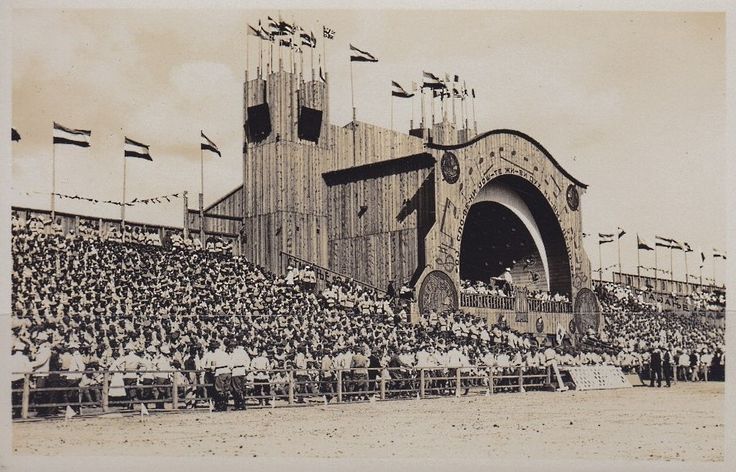
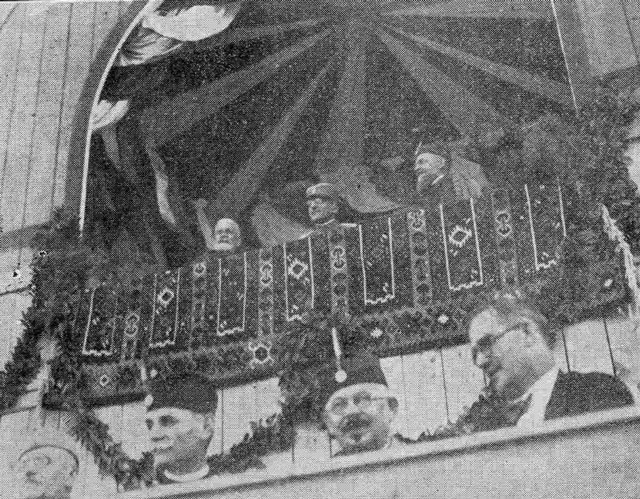
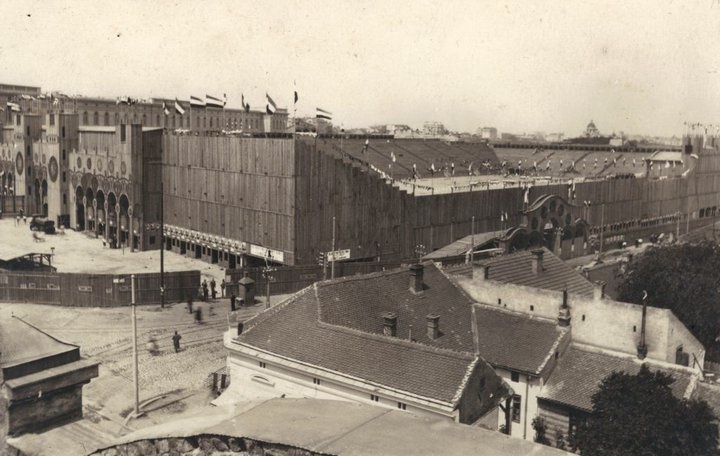
Once the Slet festivities concluded, the stadium was dismantled, and the timber was sold to cover part of the expenses. Despite the Sokoli’s efforts to secure a permanent stadium, political turmoil leading up to World War IIcontinually delayed its construction. A video from the Yugoslav Film Archive, available on their official YouTube channel, showcases the arrival of the royal couple, King Alexander I and Queen Maria Karađorđević, the architecture of the stadium, and the spectacular performances of the Sokol rally.
P.S. The author of this text is Dr. Vladana Putnik Prica, who defended her doctoral dissertation on the architecture of Sokol Halls. We take this opportunity to express our sincere gratitude to her!


