
There is a story about me that my father loves to tell, especially if I introduce you to him first. Personally, I don’t remember it, but I’ve heard it so many times that I can almost see the scene unfold:
In front of the church on Oplenac, a four-year-old girl with tousled hair tied in a ponytail stands next to her father. She holds his hand with one of hers while pointing at the church with the other, saying that “Čika Pera” is buried there.
At that moment, a woman approaches them and tells the man with the little girl that she is embarrassed—because the child knows more about the Karađorđević dynasty than she does. The man simply smiles gently and runs his hand through his daughter’s hair.

Among a booklet about Donald Duck, a collection of fairy tales, and Jova Zmaj’s Riznica (The Treasury), my mandatory childhood reading also included three volumes of Golgota i Vaskrs Srbije 1914-1918 (The Golgotha and Resurrection of Serbia). In those books, the mentioned “Čika Pera”—actually King Peter I—was the main protagonist.
In addition, Topola and Oplenac were less than a half-hour drive from Rača, the town where I was born and raised (for those just tuning in). Weekend strolls through Oplenac’s forests were a tradition for us, always accompanied by a visit to Karađorđe’s town and the Church of St. George.
Before I dive into the architecture of the Karađorđević mausoleum—whose harmony, simplicity, and monumentality never fail to amaze me—I’d like to tell you one more story.
Lately, Sofija and I seem to be retracing our personal history through the lens of art history, and that’s all we’ve been posting on the blog. And yes, that is true.
But isn’t that exactly what a blog is for? Wouldn’t you agree?
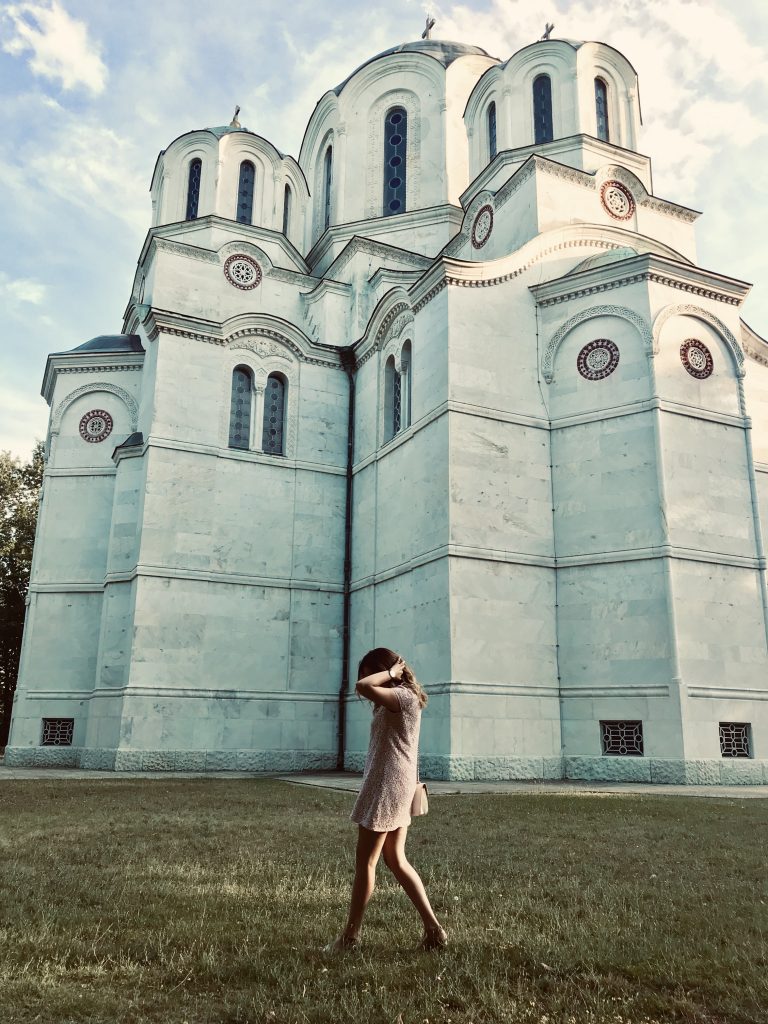
If my sister were to tell you this story, she would probably burst out laughing—even though it’s about a presentation I gave in college. You might wonder why my older sister, a law student at the time, was sitting in an art history lecture in the famous Room 401—she was there to listen to me talk about the construction of the church on Oplenac, simply because it meant so much to me.
At the time, we were preparing presentations on Serbian architecture as part of our coursework, each meant to last 15 minutes. But I ended up speaking about Oplenac for at least half an hour, maybe even 45 minutes.
What my sister always highlights, through tears of laughter, is how after class ended and our colleagues started filing out of the room, I kept going, adding:
“Just one more thing!”.
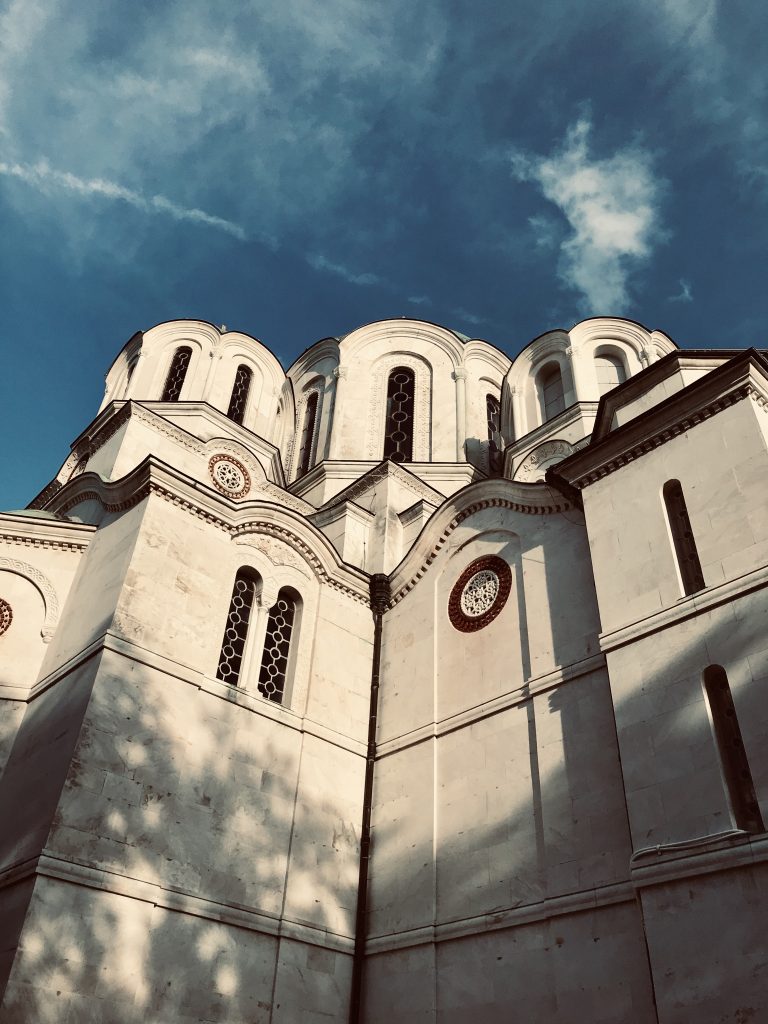
And now, years after those college exercises, Sofija and I have started a blog, where we can finally write at our own pace—I can go on about Oplenac as much as I want, and she can focus on her own interests.
Just kidding, of course! 😄
In the next section, you’ll find a concise account of the construction and architecture of the church, and I will take this opportunity to apologize to my classmates and our assistant, Vladana, for not respecting their time.
But in my defense—it was my first chance to give a lecture on the first great work of art I had ever encountered in my life.
Why Oplenac?
Topola was etched into history by Karađorđe’s uprising. After his early victories over the Ottomans, Karađorđe transformed the town into the center of the liberated part of Serbia.
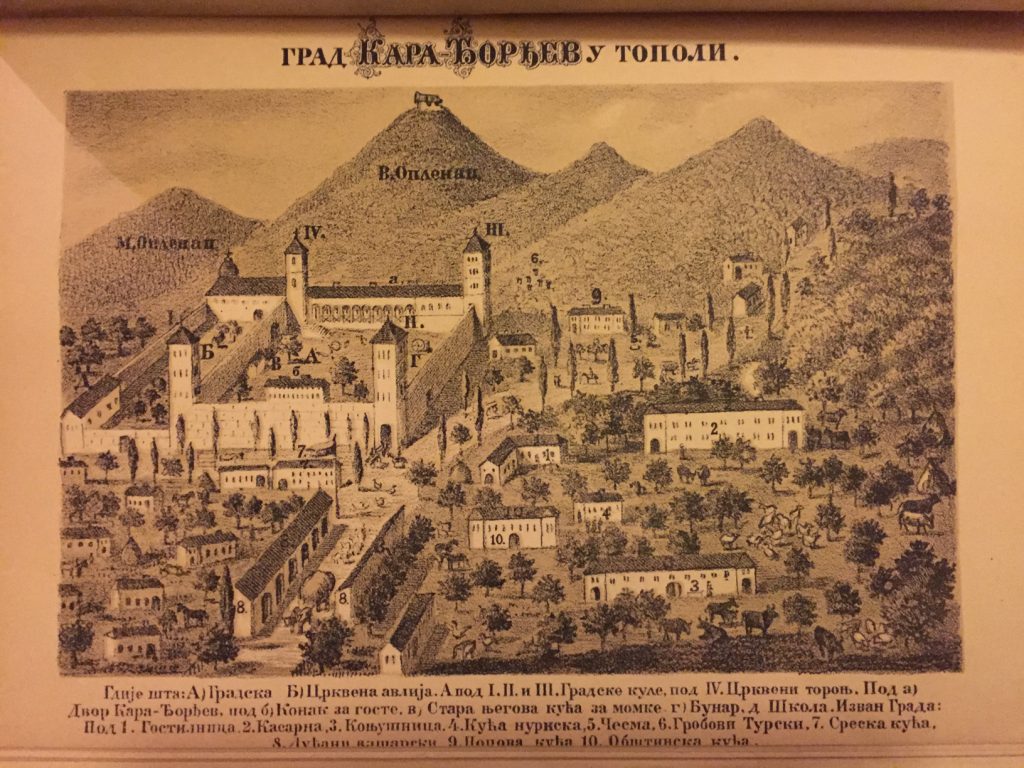
Between 1811 and 1813, he built a fortified town, featuring three-story defensive towers, two residences (one for guests and one for his family), and a church.
After the collapse of the First Serbian Uprising, the Ottomans devastated Karađorđe’s town, and the power struggle between the Karađorđević and Obrenović dynasties led to further destruction. Following the Topola Rebellion of 1877, the Obrenović dynasty ensured that the fortress was completely leveled.
Today, at the foot of Oplenac, we find the protected heritage site of Karađorđe’s town, consisting of:
- Karađorđe’s konak (residence)
- The Church of the Virgin Mary
- The old school building
- A grand monument to Karađorđe, erected in the 1930s
For everything else, we rely on illustrations from passing travelers, who captured what was lost to time.
The key moment in Topola’s transformation into a place of remembrance for the fearless Karađorđe, founder of the Karađorđević dynasty, came with the return of his grandson, King Peter I, to Serbia following the May Coup of 1903. This event left the Serbian throne vacant and marked the end of the Obrenović dynasty.
The arrival of a little-known, elderly man to the throne of the Kingdom of Serbia made it necessary to revive the memory of his famous ancestor—the man who had led the Serbian people into their first fight for freedom from the Ottomans a century earlier.
To legitimize his rule and establish a symbolic connection with Serbia’s revolutionary past, a lavish coronation was organized for Peter I Karađorđević in 1904. That same year, Serbia also celebrated the centennial of the First Serbian Uprising.
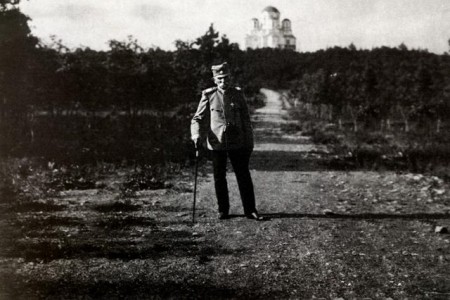
That was also the year Peter I began fulfilling a vision he had nurtured during his years in exile—the construction of a church-mausoleum where all members of the Karađorđević family would be laid to rest.
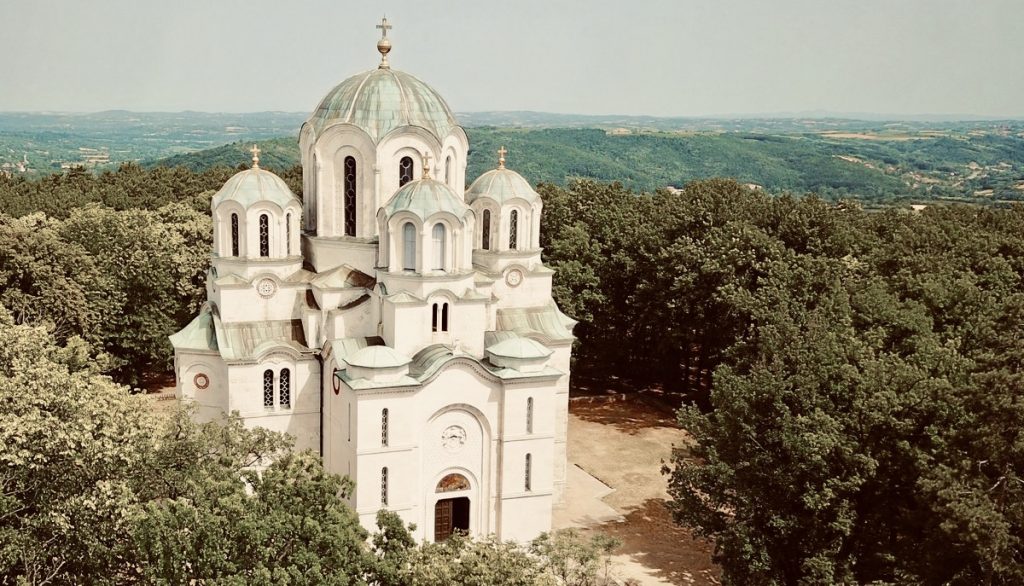
The hill above Karađorđe’s town, which physically dominates the Šumadija landscape, was named Oplenac after the wooden yokes (oplen) for ox carts, which Topola’s villagers crafted from the oak trees growing on its slopes.
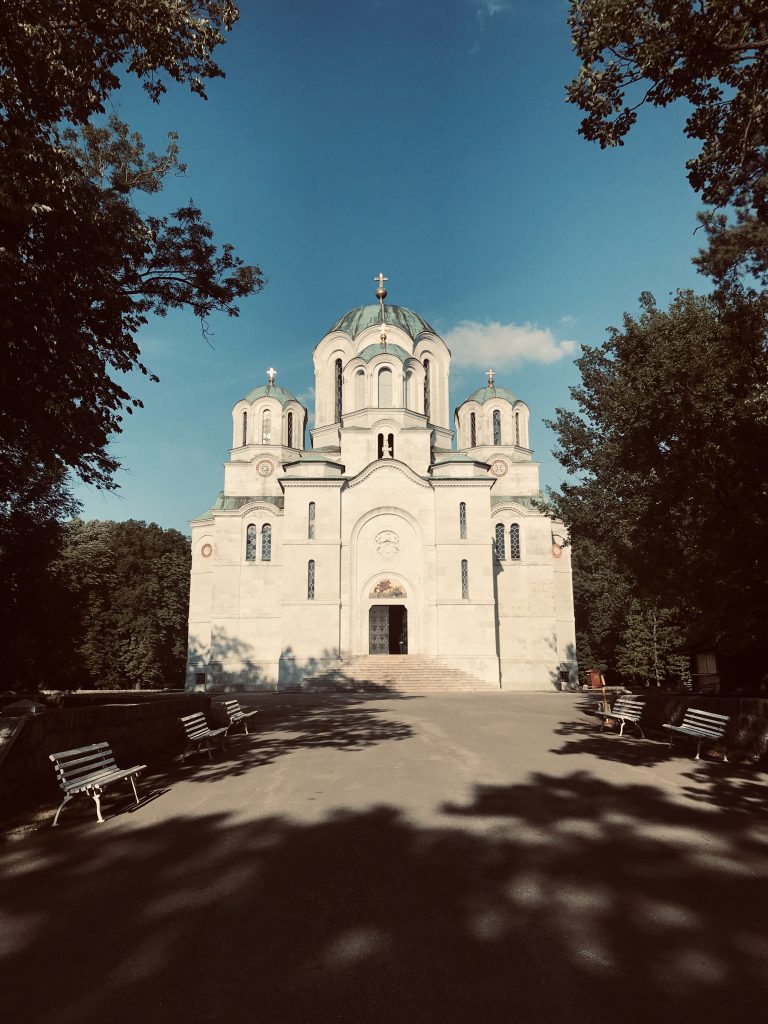
At the top of this hill, nestled among oak and linden trees, rise the five domes of the Oplenac Church, their bluish roofs adorned with gilded ribs.
Yet, beneath these magnificent vaults, more than just the history of a dynasty is preserved—within these walls, lies the glorious yet tragic history of the entire Serbian people.
The Architectural Vision for the Church on Oplenac
Seeking to build a dynastic tomb inspired by the crypt of French kings at the Abbey of Saint-Denis, as well as other royal burial sites he had encountered across Europe, King Peter I launched a design competition for a new church in Topola at the end of 1903.
It was immediately stipulated that the church “must be monumental and built in the Serbian-Byzantine style.” This was a personal royal endeavor—the project was entirely funded from Peter I’s private finances, rather than the state treasury.
The evaluation committee consisted of distinguished architects and cultural figures:
- Mihailo Valtrović, former director of the National Museum and an architect
- Andra Stevanović, professor at the Technical Faculty and a renowned builder
- Dragutin Đorđević, architect at the Ministry of Construction and designer of Belgrade’s Third Gymnasium
However, the first competition failed to yield a satisfactory design, despite the highly regarded architects who submitted their proposals.
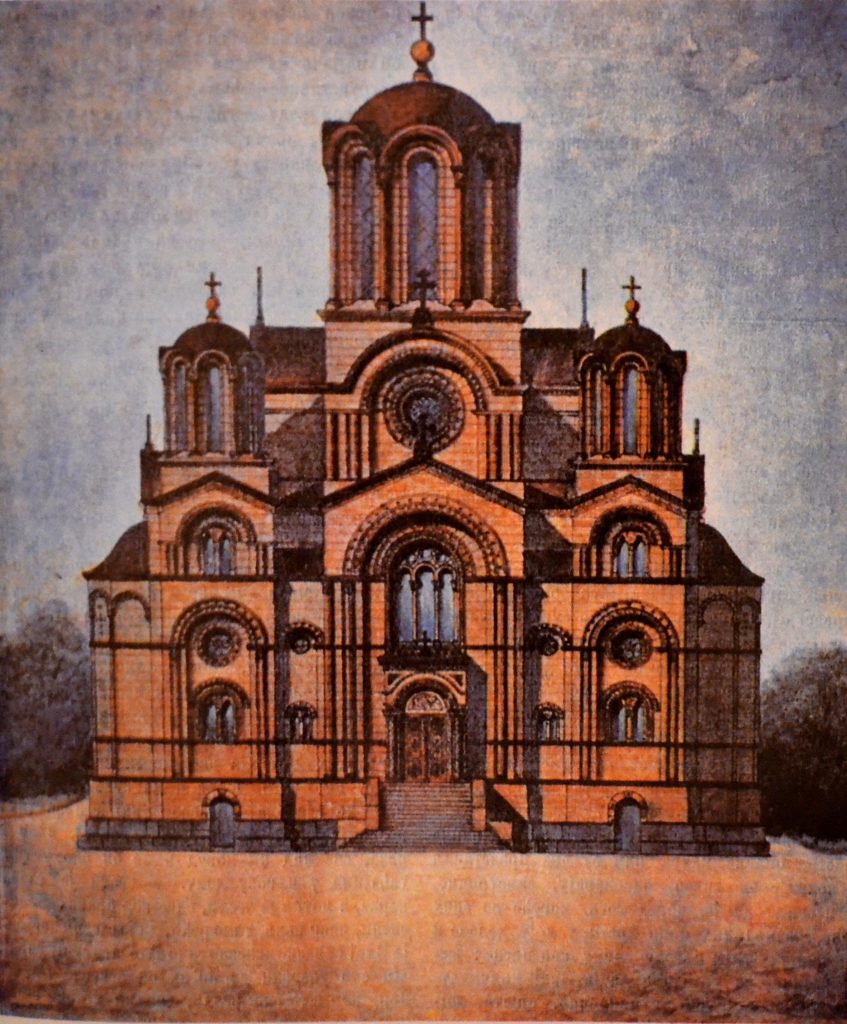
The first prize was awarded to Nikola Nestorović for his design “Zadužbina”, which was reminiscent of Gračanica Monastery, enriched with Moravian-style ornamentation—a characteristic feature of Serbian-Byzantine architecture.
Yet, this design was met with sharp criticism. Architectural critic Dimitrije T. Leko described it as follows:
“This attempt to embellish the forms of Gračanica with ornamentation from later periods failed; instead of monumentality, the result is the impression of a pigeon coop…”
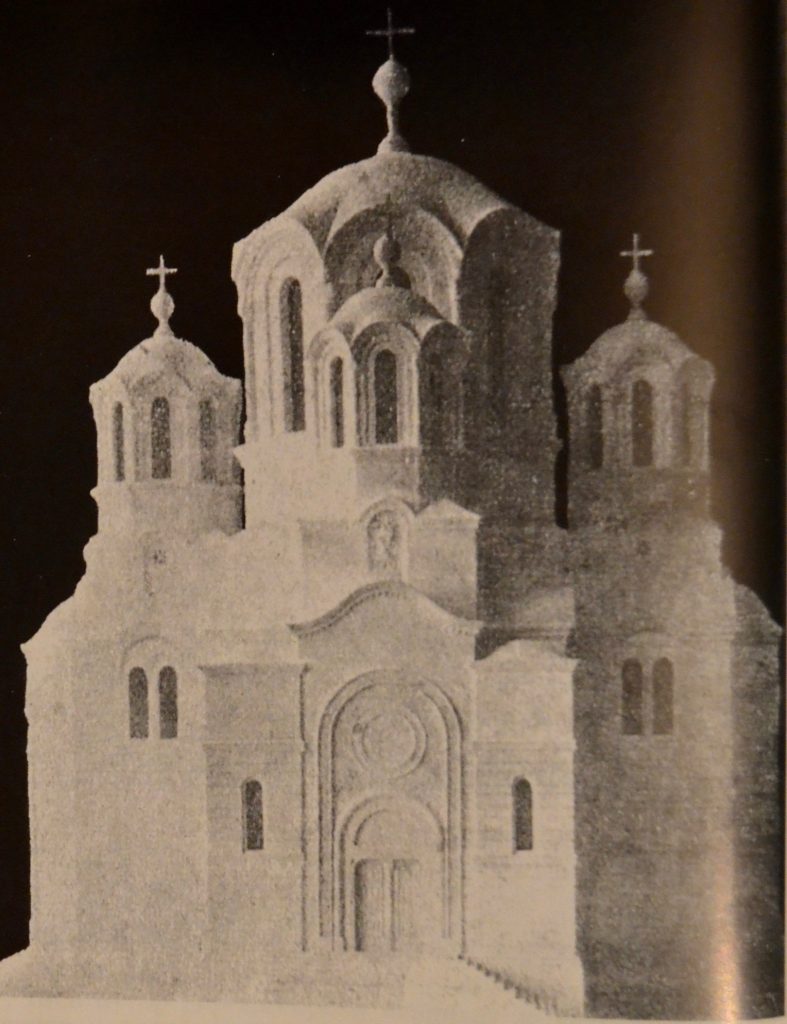
Due to insufficient historical records, the exact sequence of events in the construction of the Oplenac Churchremains unclear. However, based on documentation from the cornerstone-laying ceremony, it appears that construction initially began using the second-prize-winning design by architect Vladimir Popović—only for this design to soon be abandoned in favor of another.
The foundation stone for the Church of St. George on Oplenac was ceremoniously laid on September 24, 1907, on the feast day of Saint Simon—the monastic name of Stefan Prvovenčani, the first Serbian king.
This choice was not accidental—it was yet another symbolic move by King Peter I, aimed at strengthening his connection with medieval Serbian kingship. Beyond the architectural revival of Serbia’s golden age, the carefully chosen date reinforced the dynastic and historical continuity between the Karađorđević family and Serbia’s medieval rulers.
The charter placed in the church’s foundations bore the signatures of:
- King Peter I Karađorđević
- Metropolitan Dimitrije
- Prime Minister Nikola Pašić
- Minister Andra Nikolić
- Architect and “Chief Master Builder” Vladimir Popović
However, Vladimir Popović’s name soon disappeared from both the history of Oplenac Church and Serbian architecture altogether. The reasons remain unclear, but what followed was yet another shift in the architectural vision for the grand royal mausoleum.
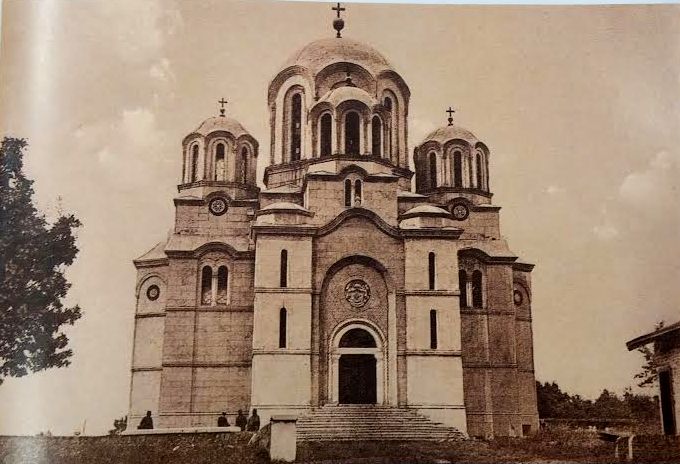
The Karađorđević Mausoleum was ultimately built according to the design of Kosta J. Jovanović, who was still a student nearing graduation when he submitted his project for Oplenac. The three-member committee, consisting of Mihailo Valtrović, Andra Stevanović, and Kosta A. Jovanović (replacing Dragutin Đorđević), unanimously agreed that his concept—a church with five domes arranged in a cross shape—was the most original and best suited for a royal mausoleum and parish church.
The change in plans likely occurred in 1909, and by 1910, the church was being constructed based on Jovanović’s design.
“All the Workforce Was Sent to the Battlefield”
The construction of the Karađorđević Mausoleum coincided with the period of Serbian suffering during the Balkan Wars and World War I. However, King Peter I was determined to fulfill his parents’ dying wish and return their remains to their homeland.
Work on the church progressed rapidly, and by the fall of 1912, the structure was almost complete. The previous year, the remains of Prince Alexander and Princess Persida had already been transferred to the new church.
The church was consecrated for the first time on September 24, 1912, again on the feast day of St. Simon, even as Serbia was preparing for war against the Ottoman Empire.
However, further work came to a halt in September 1913. The Building Committee noted:
“All the workforce was sent to the battlefield.”
With no manpower and no resources, construction on King Peter’s endowment was forced to stop.
Although the church was nearly complete before the start of World War I, it did not remain untouched by the conflict.
- Austro-Hungarian soldiers looted the crypt, searching for royal documents.
- They stripped the copper roofing from the church domes and removed the bells and copper portal coverings.
At one point, plans were made to inscribe the names of fallen Serbian soldiers on the interior walls of the church. However, after World War I followed the Great War, the number of casualties became too vast for the walls of the mausoleum to contain.
After the war, the Building Committee reconvened in 1919, but by the time work resumed, King Peter I had passed away in 1921, never seeing his final legacy completed.
Responsibility for finishing the endowment fell to King Alexander I, who in 1922 commissioned a group of Russian artists and architects to design the church’s mosaics and interior decoration.
Under Alexander’s patronage, the church would finally take its magnificent, completed form—a jewel of Serbian-Byzantine architecture, a royal resting place, and a symbol of an entire nation’s history.
The Architecture of the Church and Its Distinctive Features
The young architect Kosta Jovanović managed to create a modern ecclesiastical structure that still rested on traditional medieval influences. The white marble cladding from the nearby Venčac mountain is responsible for its monumentality, while the cross-shaped base, the gradation of masses through domes, and the rhythm of the roof cornices introduce a sense of dynamism and elevation, seamlessly integrating with the church’s prominent geographical position.
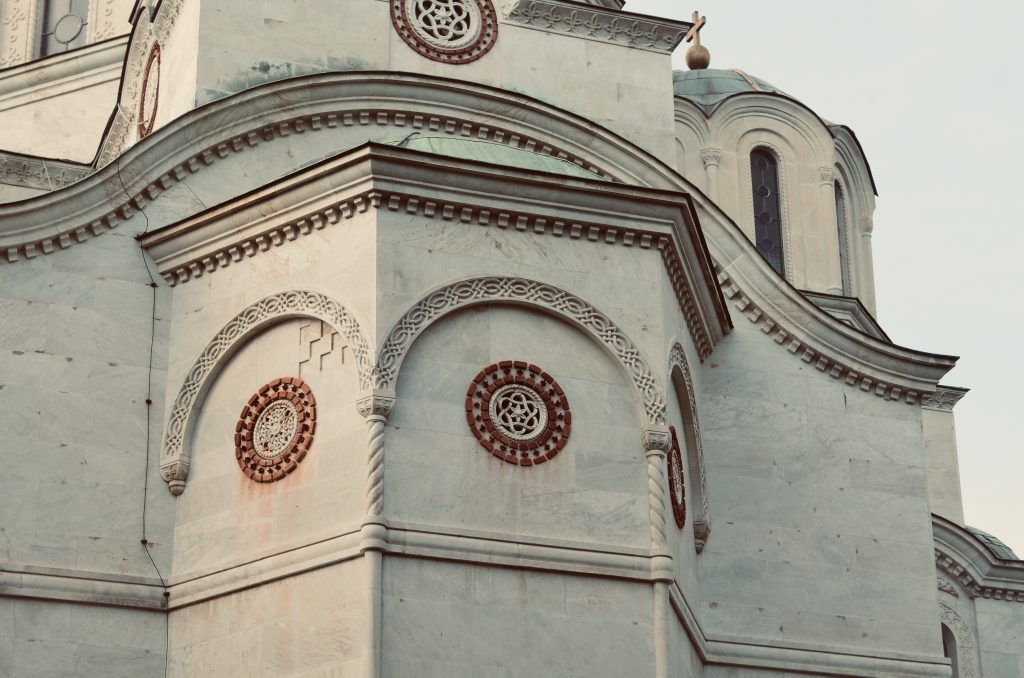
The architectural composition is marked by a deliberate restraint in ornamentation, with the first two levels remaining unembellished, allowing the sheer whiteness of the marble to define the building’s majesty. Only in the third zone do decorative window openings and rosettes appear, adding subtle yet refined details to the upper section of the façade.
An intriguing element can be noticed on the southern apse, near the southwestern rosette, where a chessboard patternwas partially carved in relief. This motif, characteristic of medieval Serbian churches, also became a key element of the national architectural style. The residence of King Peter I, situated just across from the mausoleum, prominently features this pattern. However, incorporating such a strong geometric motif on the church’s marble façade could have disrupted its monumental purity, which is likely why the idea was abandoned—leaving behind this unfinished yet revealing detail of the architectural vision behind Oplenac.
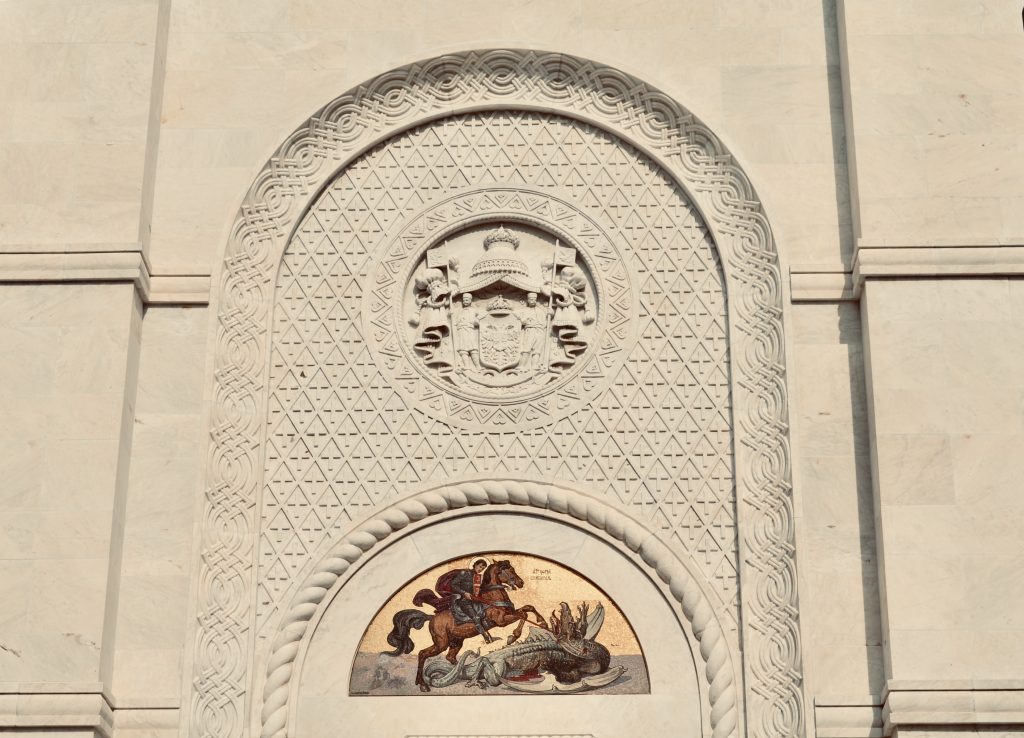
The most fascinating detail on the church’s façade is located above the main entrance portal—a depiction of Saint Djordje, the church’s patron saint, whose face has been given the likeness of Karađorđe. As the founder of the Karađorđević dynasty and the namesake of the church’s protector, Karađorđe is shown on horseback, piercing the dragon. This mosaic was designed by Paja Jovanović and crafted in Murano glass in Venice.
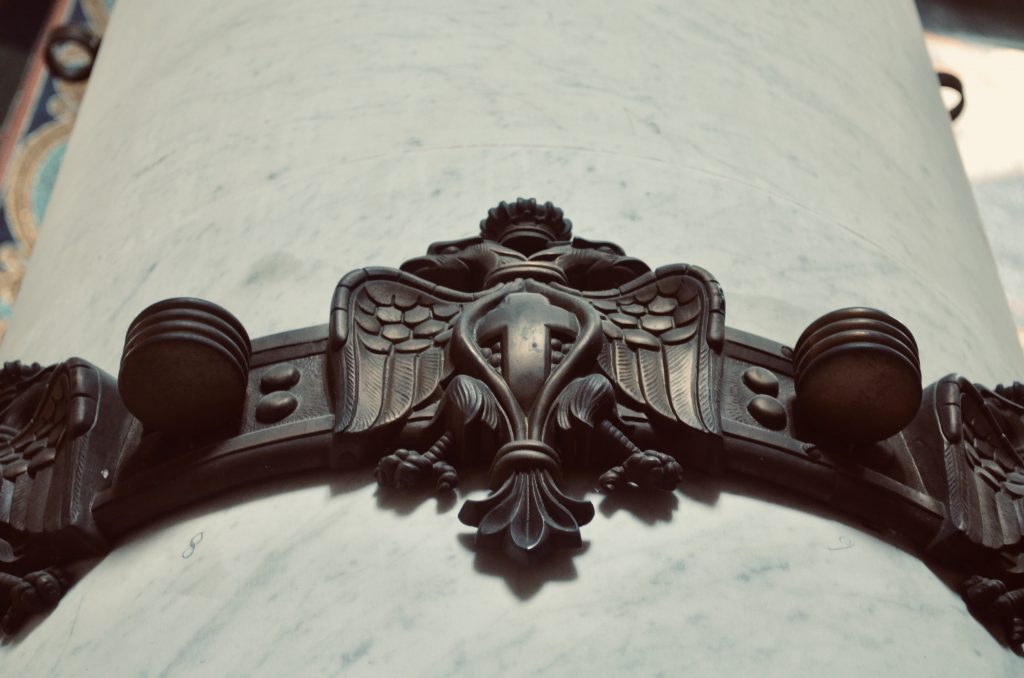
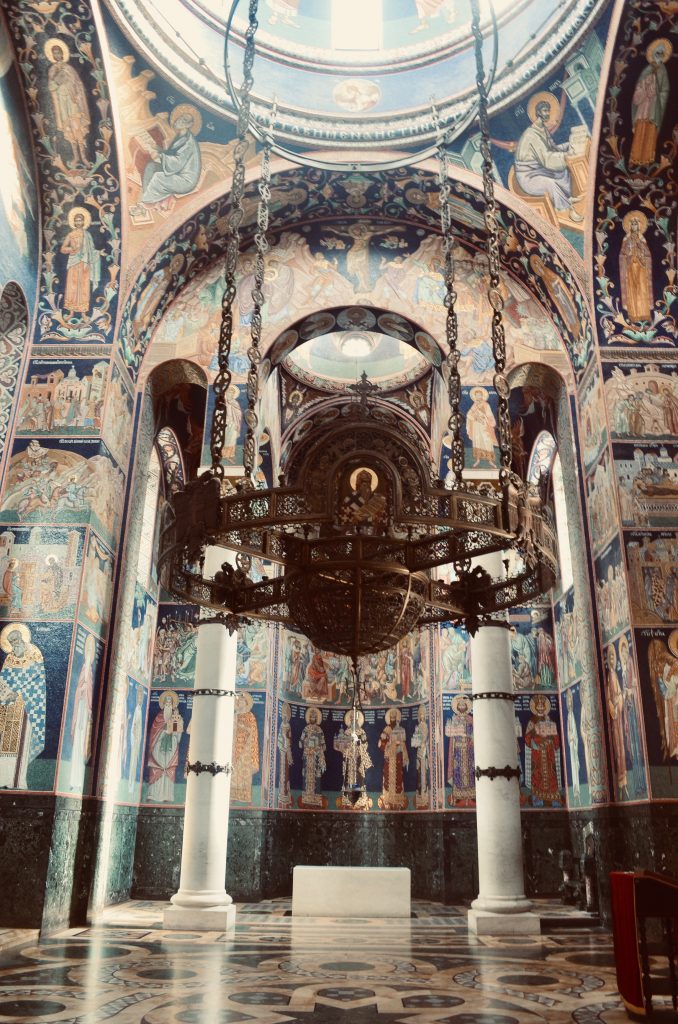
Inside the church, one of the most striking architectural features is the four massive columns supporting the smaller domes, made of Carrara marble, the same stone from which Michelangelo’s David was sculpted. One of the primary goals during the church’s construction was to ensure it “reflects the national identity of Serbia,” which is clearly evident in the heraldic symbols of the Karađorđević dynasty above the main portal, as well as in the Serbian coat of arms and the double-headed eagle, both of which are incorporated throughout the church’s design.
Dominating the interior space is a grand bronze chandelier, measuring 9 meters in diameter and weighing 1,500 kg. Designed in the shape of an inverted royal crown, it symbolizes mourning for the suffering of the Serbian people, giving the church not only a monumental aesthetic but also a deep historical and emotional significance.
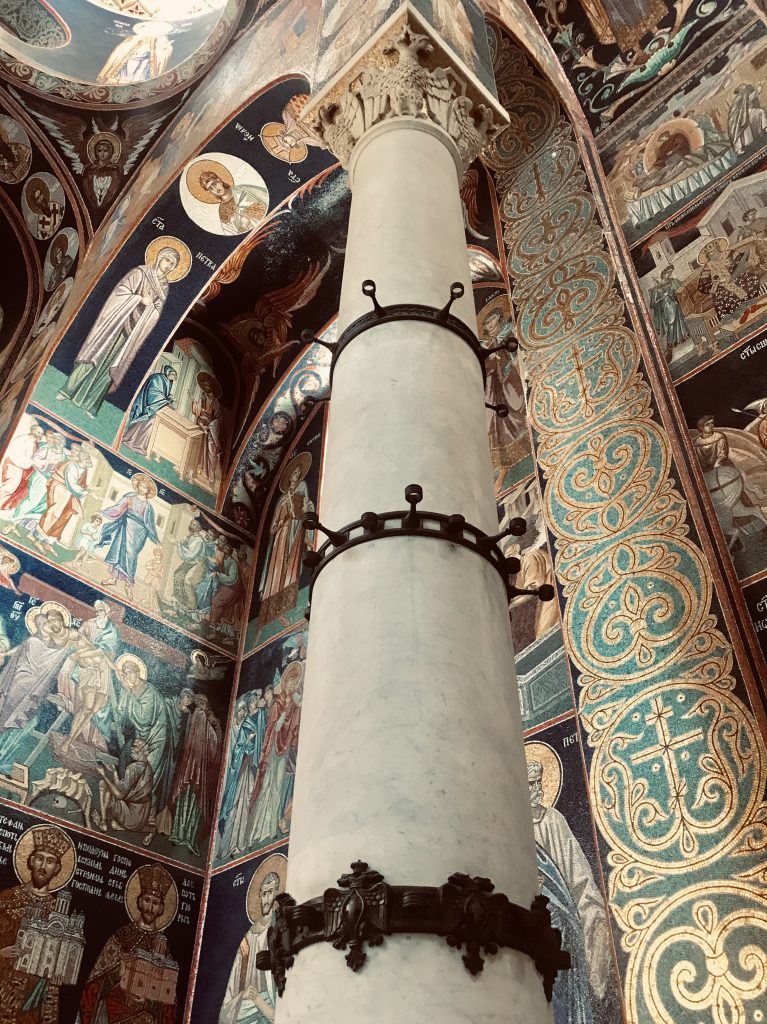
The Church of Saint Djordje on Oplenac is a unique architectural and spiritual ensemble in Serbia, offering an experience that begins from the very approach through the forest. The first encounter with the church’s radiant whiteness, set against the lush greenery of the woods and the blue sky over Šumadija, is truly striking.
Perhaps the most awe-inspiring part of the experience comes in the final stage—the vivid mosaics inside. I can only wish for you to see them bathed in the opulent summer light, allowing you to fully appreciate these “paintings for eternity”, as the mosaic technique is often described.
Oplenac will always be special to me—not only because of childhood memories or the first solo drive I took there after getting my driver’s license as a teenager but also because it remains an essential stop whenever I introduce people to my homeland.
And Šumadija—Serbia’s Tuscany—has its very own Gesamtkunstwerk, a total work of art, embodied in Oplenac.


