
These words appear in a letter Nadežda Petrović wrote to her mother, recalling the disappointment of her only engagement in 1898, which she ended after feeling insulted by her future mother-in-law’s bargaining over the amount of dowry. She made her stance clear:
“If you truly wish me happiness, then you will expect me to be a painter, not a woman seeking marriage.”
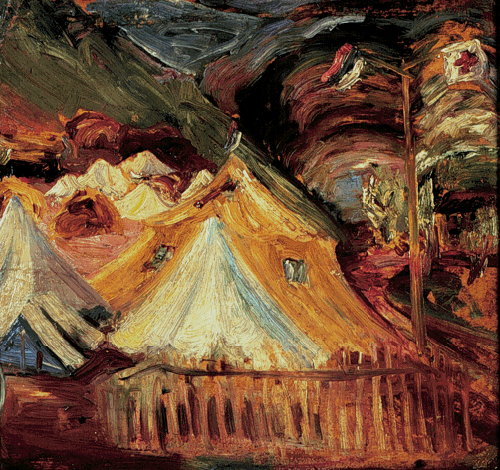
Nadežda Petrović was a woman ahead of her era, possessing many qualities that were, at the time, reserved for men. She was a political activist, a declared patriot, and a fearless volunteer nurse. She died of typhus in the First Reserve Hospital in Valjevo, after selflessly caring for wounded soldiers during World War I.
Her last brushstrokes captured the tents of the Valjevo hospital, as well as the breath of death that she seemed to foresee. Writing about Nadežda inevitably carries a heroic tone—she consciously rejected all offers of evacuation from the horrors of war, extended to her by the Supreme Command in Niš. She was determined to help those fighting for the freedom of her homeland, and for this, she was awarded the Medal for Bravery. That same bravery led her to death—and death to immortality.
Nadežda’s paintings were criticized and rejected in her own time. The artistic scene of the still-young Kingdom of Serbia could not comprehend the bold, unyielding brushstrokes of Petrović’s work. When she held her first solo exhibition in the summer of 1900, a review in Nova Iskra harshly condemned her:
“After studying at the Academy, after years of walking among the works of old and new masters, does the young lady really find no better or more beautiful inspiration for her impassioned youth than these ‘Impressionist works’—that sick and rotten understanding of sick and rotten minds?”
Yet, the criticism did not deter her. She continued her studies in Munich, later refining her skills in Rome, Venice, Berlin, and Paris. She visited major exhibitions across Europe, developing a distinctive artistic expression—rooted in Impressionism, but also Expressionism, sometimes verging on complete abstraction.
With bold, energetic brushstrokes, she painted her family members, Serbian peasants, landscapes, and historical monuments. She once wrote about herself:
“What else could I become, I, Nadežda Petrović, daughter of Dimitrije and Milena, but a Serbian painter—when instead of my first childhood photograph, I have a drawing? My father, Dimitrije Mita Petrović, trained in painting by the great Steva Todorović, devoted himself to drawing when I was a child, teaching it at the Realka in Čačak. Back then, I looked at my drawings more often than I looked at myself in the mirror.”
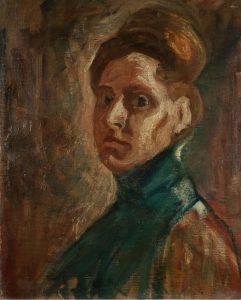
As her own words suggest, patriotism and art were inseparable for Nadežda Petrović. Her modernist approach to art aligned with contemporary ideas of national unity and the unification of all South Slavs, first on a cultural level, then on a political one.
Immediately after returning from Munich in 1903, Nadežda, along with a group of educated and courageous women, founded the Circle of Serbian Sisters, a civic association aimed at spreading national consciousness—not only among Serbs in the occupied southern regions but also among those north of the Sava and Danube and west of the Drina. She actively carried out the political ideas promoted by the intellectual elite during the reign of King Peter I Karađorđević, ideas championed by Jovan Skerlić, Mlada Bosna, and other national movements.
At the same time, Petrović played a key role in organizing the First Yugoslav Art Exhibition in 1904, hosted by students of the Great School (precursor to the University of Belgrade). The exhibition brought together 96 artists—Serbs, Croats, Slovenes, and Bulgarians—demonstrating her vision of cultural unity. That same year, Serbia celebrated the centennial of the First Serbian Uprising, along with the coronation of King Peter I, events that further fueled the gathering of Yugoslav youth around shared ideals.
In the following years, Nadežda traveled across Serbia, participating in art colonies in Sićevo (near Pirot) and Resnik. During this period, her work centered on Serbian peasants and the Serbian land, portraying them as they truly were—not romanticized, but honest and raw, a reflection of her own deep identification with them.
Unlike many artists of her time, who idealized picturesque landscapes and colorful folk costumes, Nadežda did not mask the hardships of rural life. Instead, she painted peasants and their surroundings in vivid yet somber tones, using rough, dynamic brushstrokes, creating images that were sometimes harsh, even unsettling. Her unfiltered realism did not sit well with the urban elite, who preferred art that beautified reality rather than exposed it.
Despite her deep connections with the intellectual and political elite—many of whom were frequent visitors to the Petrović family home in Ratarska Street (today 27th March Street) in Belgrade—Nadežda did not see peasants and workers as opposites to the urban bourgeoisie. Instead, she viewed them as the foundation of the modern Serbian state, the true predecessors of city dwellers.
And so, she painted them as such—with dignity, with hardship, but above all, with truth.
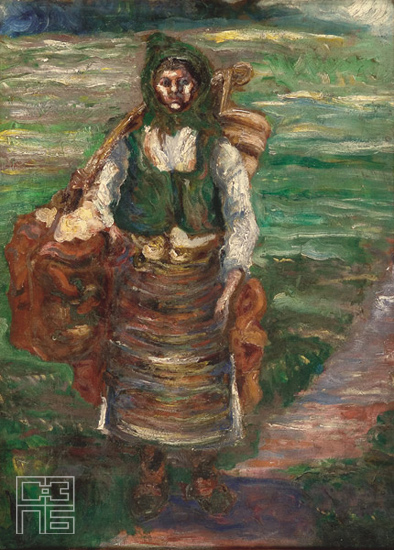
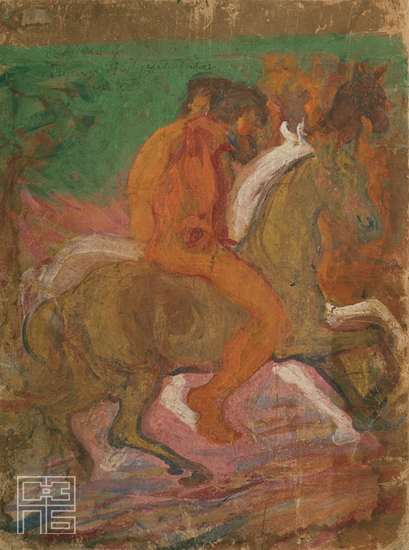
One of the most intriguing stories from Nadežda Petrović’s artistic journey is that of her painting Seljanka iz Šumadije, which she most likely took with her to Paris in 1910. During this time, she stayed in the studio of her close friend, the renowned sculptor Ivan Meštrović.
At the time, Meštrović was deeply immersed in the creation of sculptures for his grand, but unrealized, Vidovdan Temple, drawing inspiration from the Kosovo Myth. Spending time with him, Nadežda also became increasingly fascinated by the most celebrated Serbian epic narrative, translating it into a Secessionist, decorative form.
On the reverse side of Seljanka iz Šumadije, she painted two legendary Serbian epic heroes—Marko Kraljević and Miloš Obilić. For years, these works remained together as a single piece, until they were successfully separated through restoration work at the Pavle Beljanski Memorial Collection, where both paintings are preserved today.
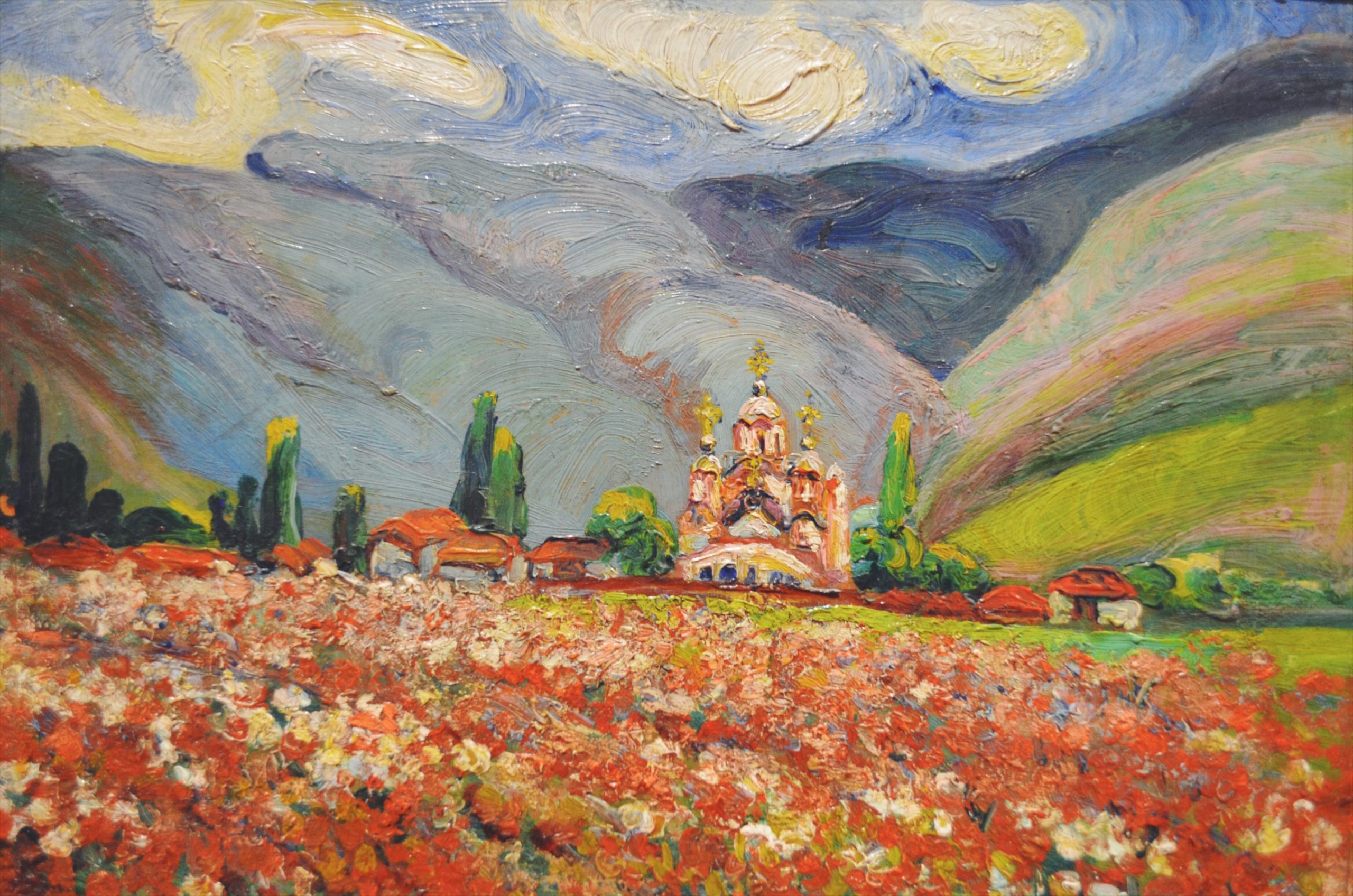
In her works, we can recognize elements of Impressionist brushwork, at times Expressionist intensity, and even Fauvist boldness. Some of her paintings embody Symbolist mysticism, others Impressionist flirtations with light, while a number of them serve as a vivid expression of political ideology through color.
During her time in Paris, Rome, and Venice, she painted Notre Dame, the Colosseum, and St. Mark’s Basilica—landmarks that symbolize the cultural and historical identity of these cities. She did the same in Serbia, especially during the Balkan Wars and World War I, when she transferred monuments of national history onto canvas—painting the Dečani and Gračanica monasteries (several times), the city of Prizren, and the Vezirov Bridge.
At first glance, these works exhibit striking modernity—flattened motifs, rapid brushstrokes, raw color, and a lack of narrative. However, considering the circumstances in which they were created, their meaning extends beyond formal modernist purity.
These paintings were made between shifts as a volunteer nurse, while Petrović traveled alongside the Serbian army—first as it liberated, then as it defended these regions. Seen in this context, her art is more than just an experiment in form; it is a testament to war, resilience, and national memory—painted not from a distance, but from within the very heart of battle.
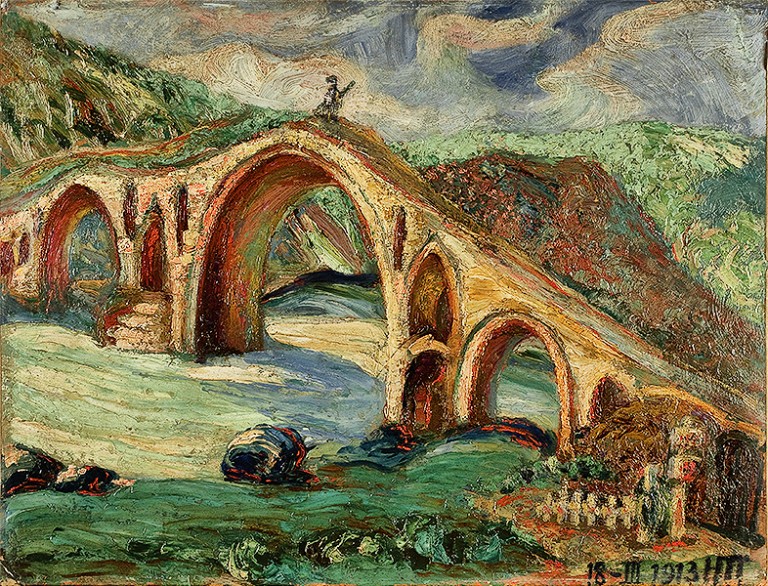
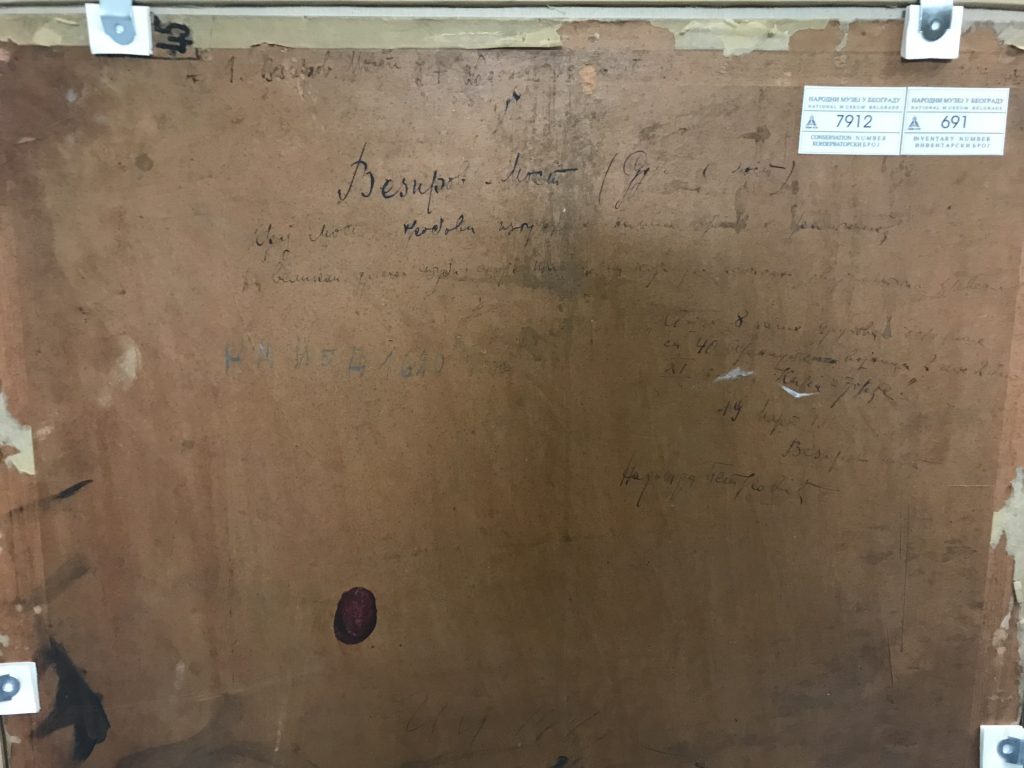
A testament to Nadežda Petrović’s intertwined artistic and patriotic identity is her painting Vezirov ili Most cara Dušana, on the back of which she left a handwritten note. In it, she recorded a brutal moment in history—the execution of forty enemy soldiers in retaliation for the deaths of eight Serbian brothers.
This inscription is more than just a historical footnote—it is evidence of Nadežda’s direct presence in the Serbian liberation struggles. Unlike traditional war artists, who observed and documented battles from a safe distance, she was on the front lines, not only as a painter but as a nurse, actively aiding the wounded while also creating artworks that carried both documentary and ideological significance.
Her art and patriotism were inseparable, and this deep fusion of identity is unmistakably reflected in her work.
Much more could be written about Nadežda Petrović, but we will stop here. Let this short tribute serve as a reminder of a true heroine of Serbian painting, but also a hero of Serbian suffering and resilience.
Her legacy lives on in the National Museum in Belgrade, the Pavle Beljanski Memorial Collection in Novi Sad, the Nadežda Petrović Art Gallery in Čačak, and other institutions that preserve her many works, waiting to be seen and appreciated.
Nadežda Petrović was—and remains—an inspiration. She lived and died true to herself, leaving behind a legacy of courage, vision, and unshakable belief in her art and her people.


